Lawson and Veena join forces
The ShepherdLawson and Veena join forces in pursuit of the Shepherd, turning two private reasons for seeking him into a joint operation across Afghanistan. The alliance is driven by the Shepherd’s role in guiding Taliban members across the border and receiving trafficked children as payment. As the pursuit advances, their cooperation becomes practical as well as personal: Veena leads the route, Lawson watches their rear, and the hazards of the landscape make each person’s attention consequential. The mission’s moral purpose does not shield them from the dangers of the war zone; it carries them directly into them.
A Shared Target
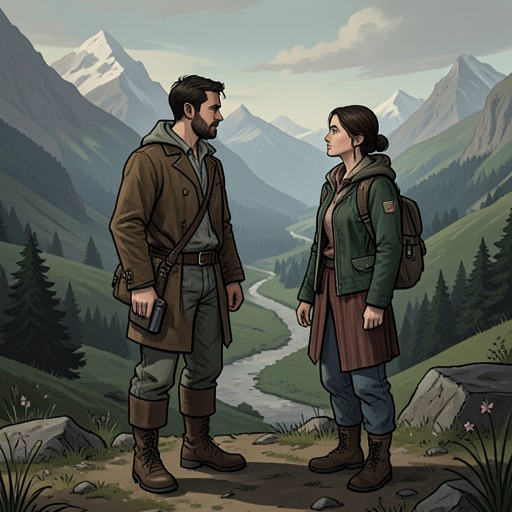
Lawson explains that the Shepherd guides Taliban members from Pakistan into Afghanistan. He also says that the Taliban supplies the Shepherd with young children as payment for trafficking them across the border, and that he intends to stop the arrangement by whatever means are available to him. The account establishes both the target and the reason Lawson regards the pursuit as urgent: the Shepherd’s work connects cross-border movement to the exploitation of children.
Veena makes clear that she is seeking the same person. Her own reason is bound to the disappearance of her younger brother, who went missing two months earlier. The two do not begin with identical circumstances: Lawson describes a mission to end the Shepherd’s trafficking, while Veena’s pursuit is rooted in her missing sibling. Their brief agreement nevertheless creates a clear operational bond. They can work toward the same target without the narrative treating their losses or objectives as interchangeable.
Coordinated Movement
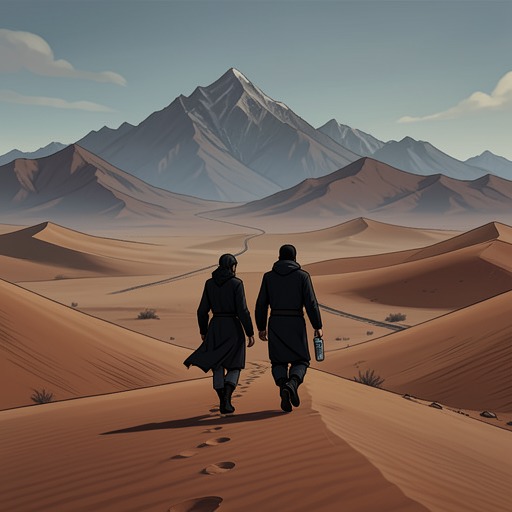
Once they set out, Veena takes the lead, choosing a bearing that carries them down into a valley. She keeps roughly fifteen feet between herself and Lawson. Every few feet she stops, scans from side to side, checks her bearing, and continues. Lawson follows behind, changing the order of his checks every few minutes to make sure the area to their rear remains clear. Their method divides attention between route-finding and security: Veena watches the ground and direction ahead, while Lawson guards against what may be approaching from behind.
They travel this way for the better part of an hour, crossing the Afghanistan countryside. The steady, repeated checks give the pursuit a rhythm, but not a sense of safety. Lawson describes their destination as confronting a profoundly bad man and settling overdue moral accounts; the language of reckoning sits beside the careful, methodical work required simply to keep moving. Their shared resolve supplies a direction, not control over the terrain.
The Minefield
The immediate danger changes when Veena’s foot is found partially on a land mine. Lawson has never dealt with mines before, but he knows that Afghanistan is among the countries where they remain widespread. He attributes their presence to mines laid by Soviet forces during the occupation, a legacy that turns the countryside through which they are pursuing the Shepherd into a threat in its own right.
Lawson’s attention shifts from the target to the circumstances that have exposed them to this hazard. He wonders why International Security Assistance Force units in the area have not cordoned it off and why there are no warning signs. These are questions raised by the scene, not answers supplied by it. The absence of visible precautions sharpens the contrast between the pair’s careful field procedures and the larger failure to make the danger apparent. Their pursuit is directed against deliberate harm, yet they are also vulnerable to a danger whose warning and management appear absent.
Escalation and Consequence
The danger does not remain confined to the minefield. At another point Lawson senses an attack and pivots to the right; later, he turns and finds himself facing a person with a dark face streaked in camouflage paint, who orders him not to move. The encounter makes clear that the pursuit has brought Lawson into immediate personal danger, though the available account does not explain every step connecting these moments or identify the camouflaged figure.
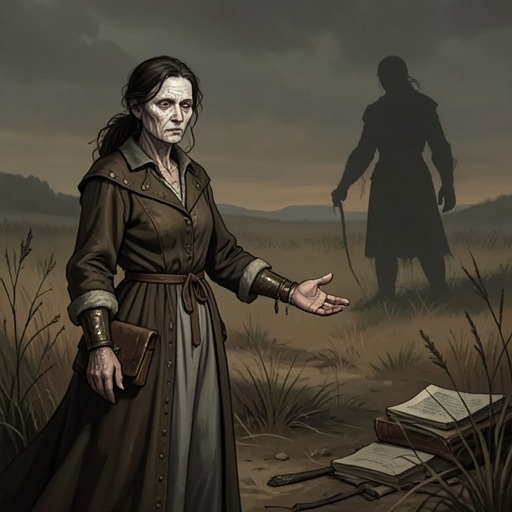
The action culminates in an explosion and a later confrontation with the Shepherd. A round is stopped by the trauma plate in Lawson’s body armor before it can reach his heart. The Shepherd is momentarily surprised, then steps forward and raises his pistol again. This consequence marks the pursuit’s sharpest reversal: Lawson survives the shot, but the protective equipment does not end the confrontation or secure the mission. The joint hunt has moved from a common objective, through hazardous terrain, into a direct and unresolved struggle. Its significance lies in that progression: a morally urgent alliance can organize action, but it cannot make the path to its target safe.